HSC Chemistry Module 8: Designing a Chemical Synthesis Process — The Complete Exam Guide
Every NESA question on Module 8 IQ3 worked mark by mark — the balancing act, Haber and Contact, atom economy, plant siting, and an unseen capstone.

Every NESA question on Module 8 IQ3 worked mark by mark — the balancing act, Haber and Contact, atom economy, plant siting, and an unseen capstone.

Monitoring the environment, worked mark by mark: the TRACE framework, eutrophication, acid deposition, metal contamination, and ten HSC questions with mark maps.

The HSC Chemistry dot point students underestimate. NESA tested it once in 7 years — but CSSA, Catholic, Knox, Barker, NSG and others test it constantly. Our complete exam guide cross-references 26+ trial questions and every marking scheme to show the structure → action linkage markers reward, with verb-by-verb scaffolds and 13 worked questions.

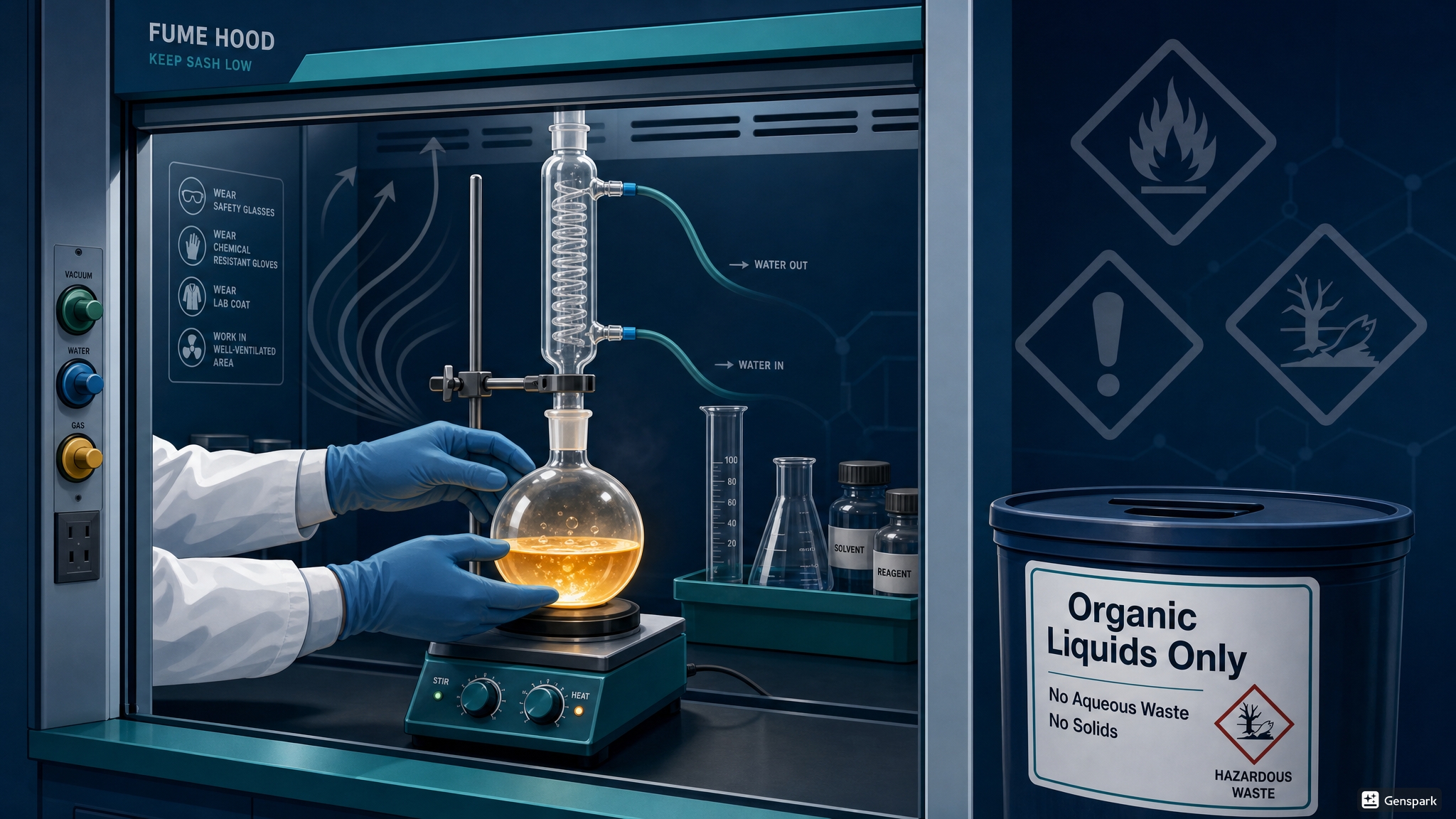
Master the NESA Module 7 dot point on safely handling and disposing of organic substances. Marker keyword strategy, mark-by-mark Band 6 model answers from 2019–2025 HSC + trial papers, decoded by SKY HSC College.

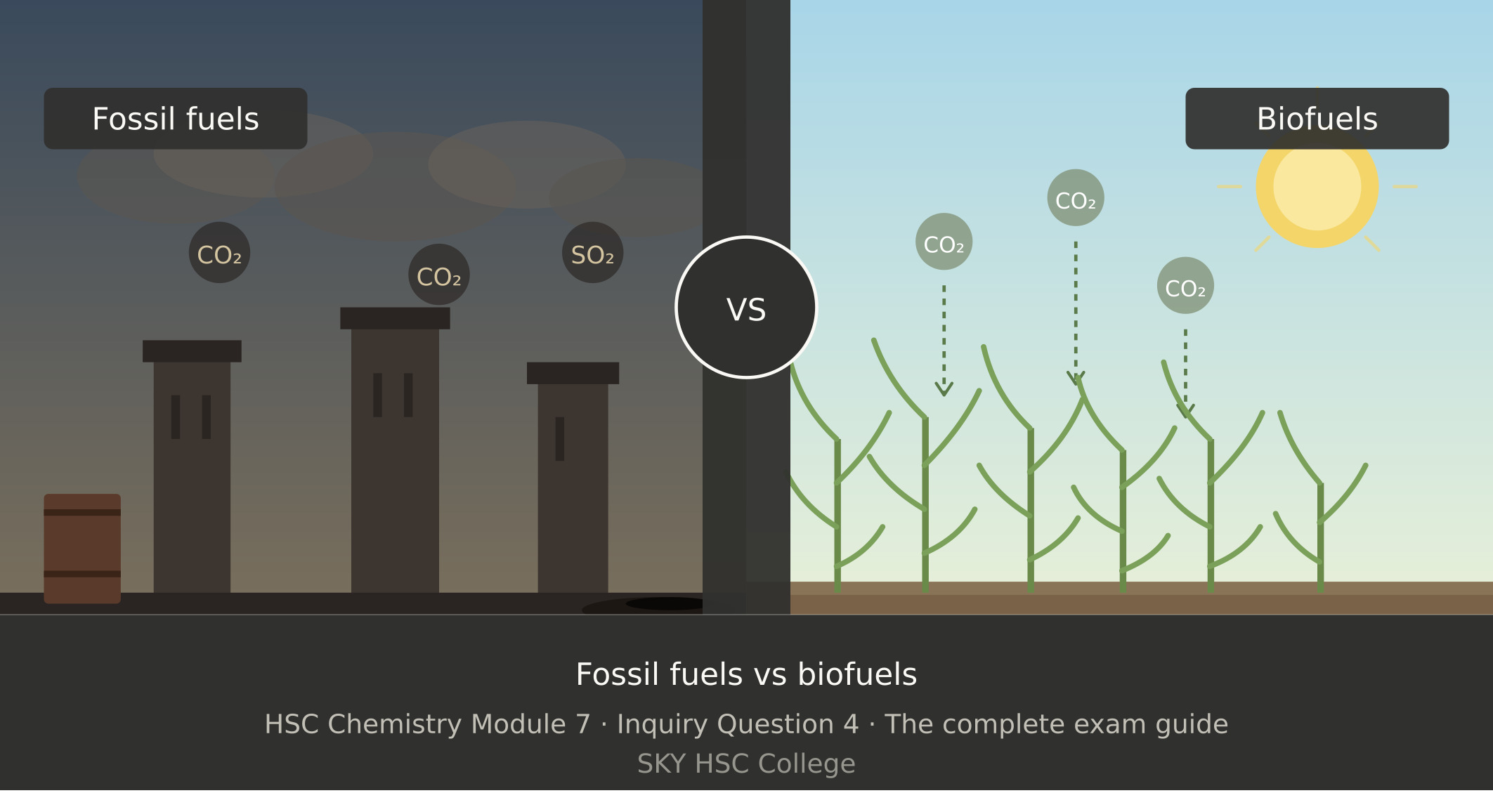
Complete HSC Chemistry Module 7 IQ4 exam guide — fossil fuels vs biofuels and ethanol. Built around the SKY HSC 4-pillar sustainability framework with both ethanol production routes, the 6-2-4 carbon cycle, and 10 NESA-style model answers with mark-by-mark breakdowns.

In HSC Chemistry, understanding the "Working Scientifically" outcomes is just as critical as knowing the chemical equations. When you are asked to evaluate an acid-base titration, NESA expects you to specifically address three pillars: **Reliability**, **Accuracy**, and **Validity**. This guide covers every concept, worked example, and exam technique NESA markers expect to see — including systematic vs random errors, percentage error calculations, variables, primary standards, and fully worked exam-style questions.

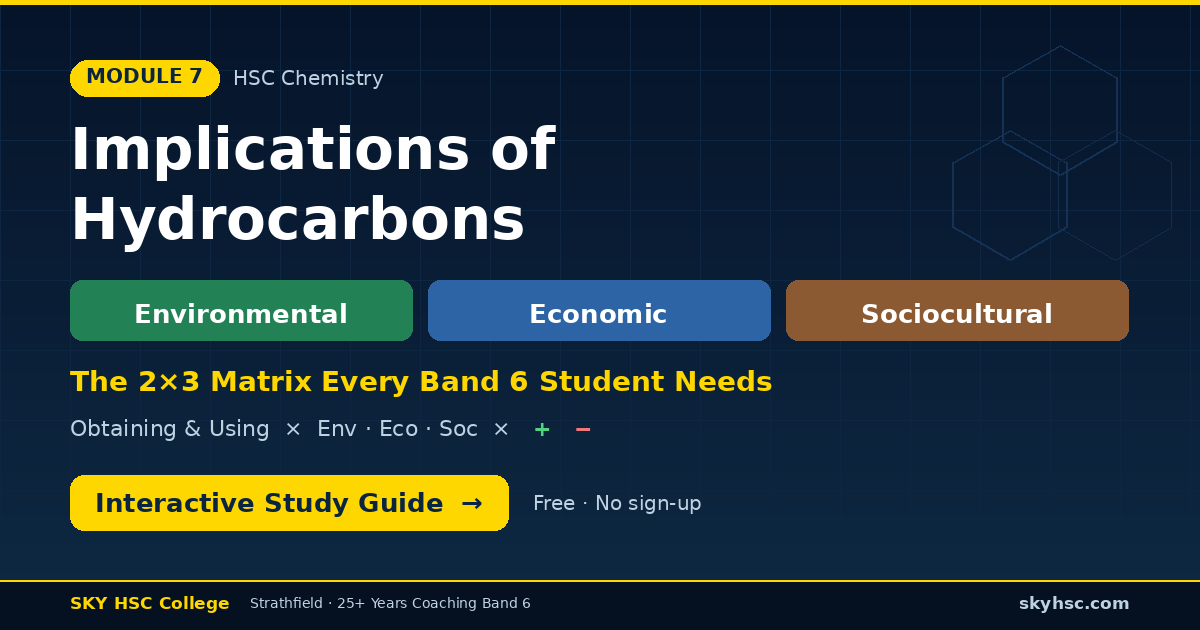
"Examine the environmental, economic and sociocultural implications of obtaining and using hydrocarbons from the Earth." This is the **most-balanced** dot point in Module 7 — and the one students lose the most marks on. It looks like a "talk about pollution" question. It isn't. NESA wants a **three-lens, two-action** analysis with **specific examples**, **explicit judgement**, and **NESA-verified terminology**. Every sentence, model answer, and strategy in this guide is sourced from actual NESA HSC and NSW selective-school trial marker schemes (2019–2025) — designed as copy-paste-ready sentences you can drop straight into your next exam answer.

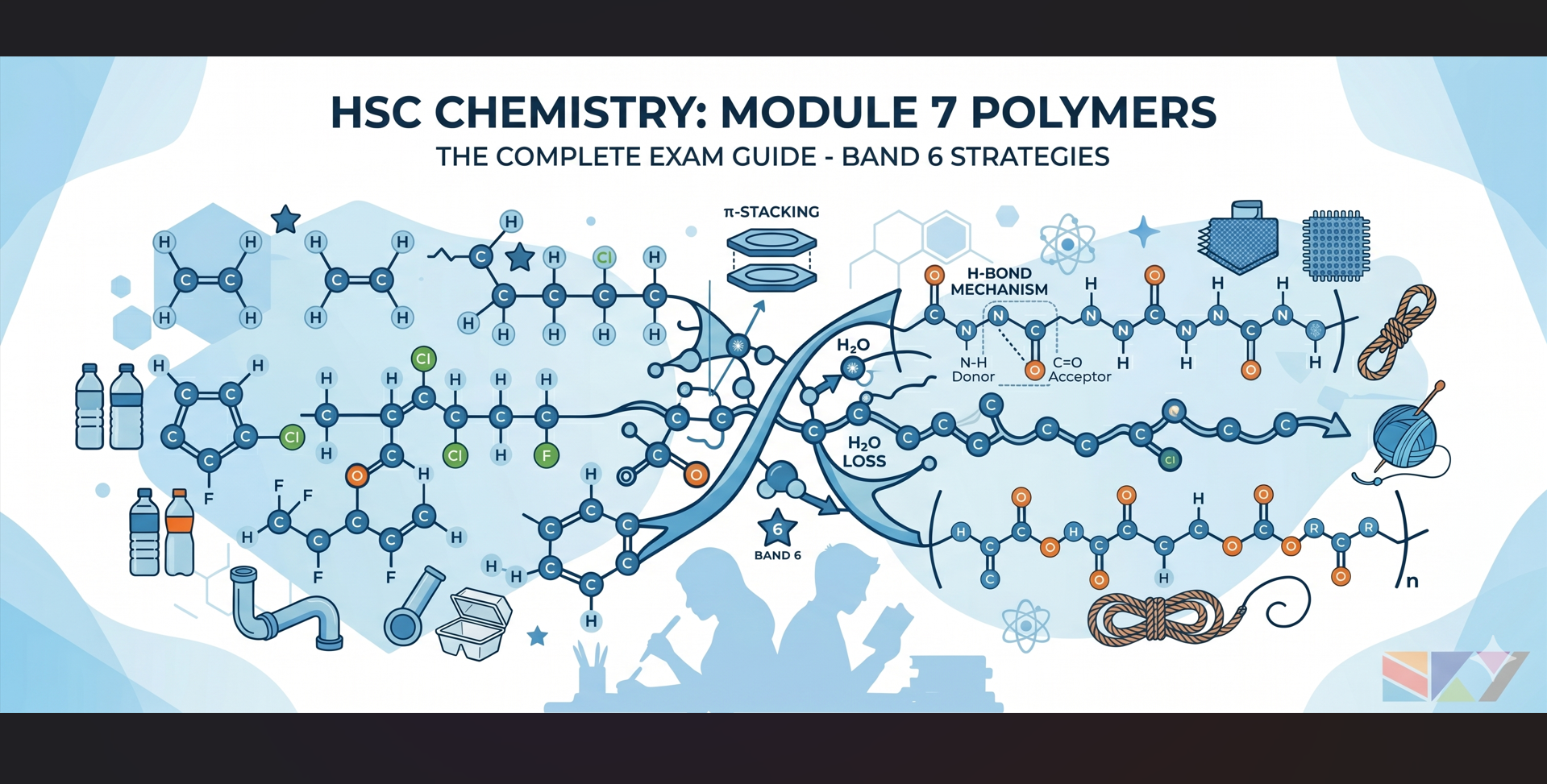
Polymers is the kindest topic in Module 7 — only 2 dot points, only 6 syllabus polymers, only 9 NESA verbs ever used. Yet students still drop marks every year on the MW calculation (2025 HSC Q16), the unseen-polymer IMF analysis (2025 Q28), and the biopolymer monomer ID (2022 Q18, 2024 Q14). Why? Because they memorise polymer names instead of the causal chain markers reward. This guide rebuilds you from the chain up.
Learn how to answer HSC exam questions with NESA key verbs, mark allocation, dot point strategies, and extended response planning. Boost your results with SKY HSC College.
Maximise your study efficiency with these proven strategies from our top-performing students.

a comprehensive roadmap for NSW students tackling the UCAT in 2026 for entry into medicine or dentistry

Master your HSC Chemistry exam with proven techniques used by Band 6 students. Learn the 5-minute reading time strategy, memory dump protocol, calculation methods that earn full working marks, and emergency tactics for when you're stuck. Real strategies that actually work on exam day.

Many students experience a a first-term dip in marks in their first term of Year 12. This is preventable. Learn the 3 essential strategies that separate high-achieving students from those who struggle.
Creating an effective study timetable is crucial for HSC success. Here's a comprehensive guide to help you maximise your study efficiency.

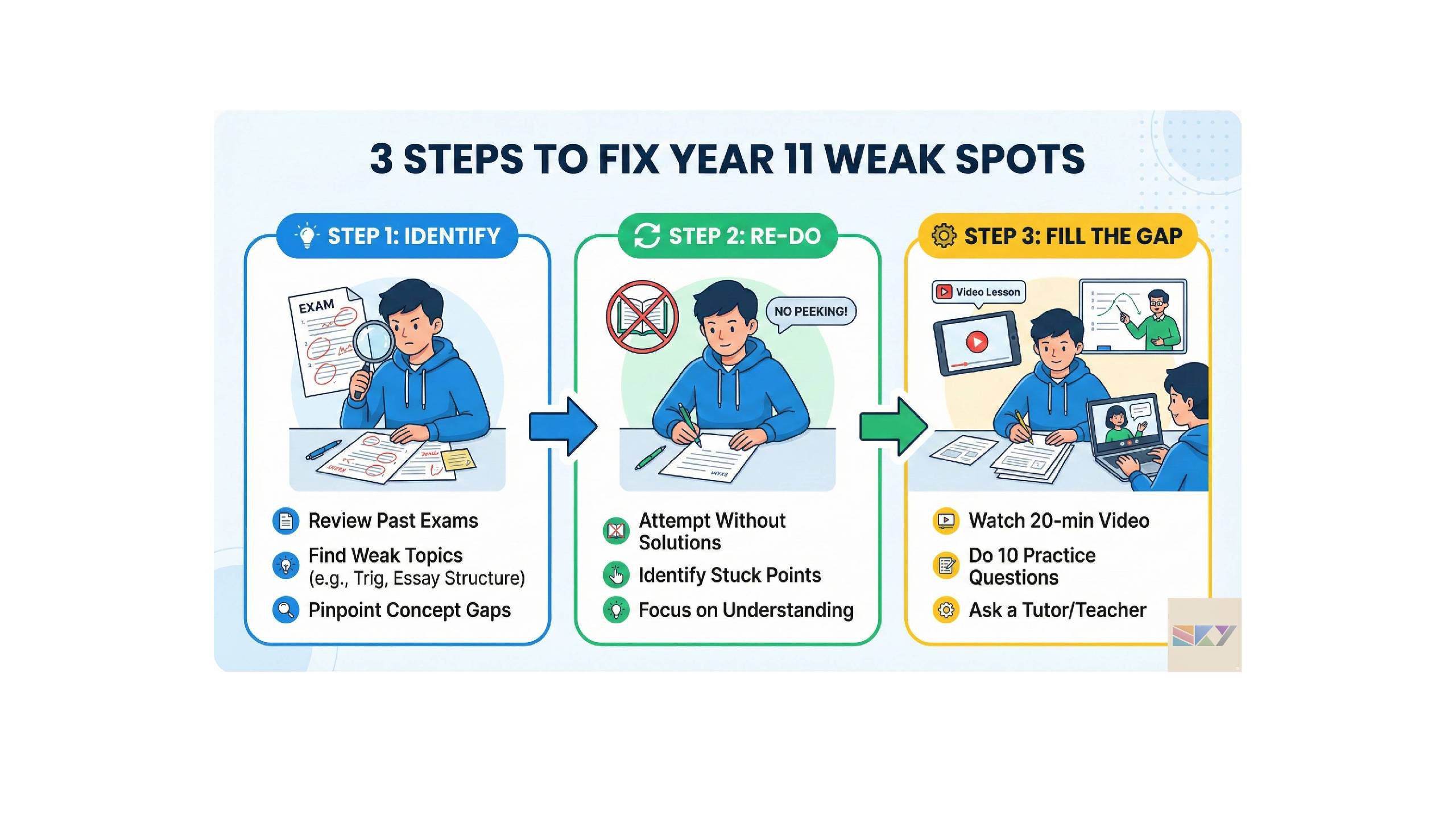
Just finished Year 11? The step up to Year 12 is massive. Discover the 5 critical things 99+ ATAR achievers are doing right now in Term 4 that you aren't. Don't get left behind.